Not one single process
Regional dark teas use different combinations of fixing, rolling, piling, steaming, compression and drying. Their microbial communities and storage histories also differ.
Common sensory direction
Well-made examples can show wood, grain, dried fruit, herbal, betel-nut, jujube or gentle earthy notes. Cleanliness is more important than simply tasting 'old'.
Compression and storage
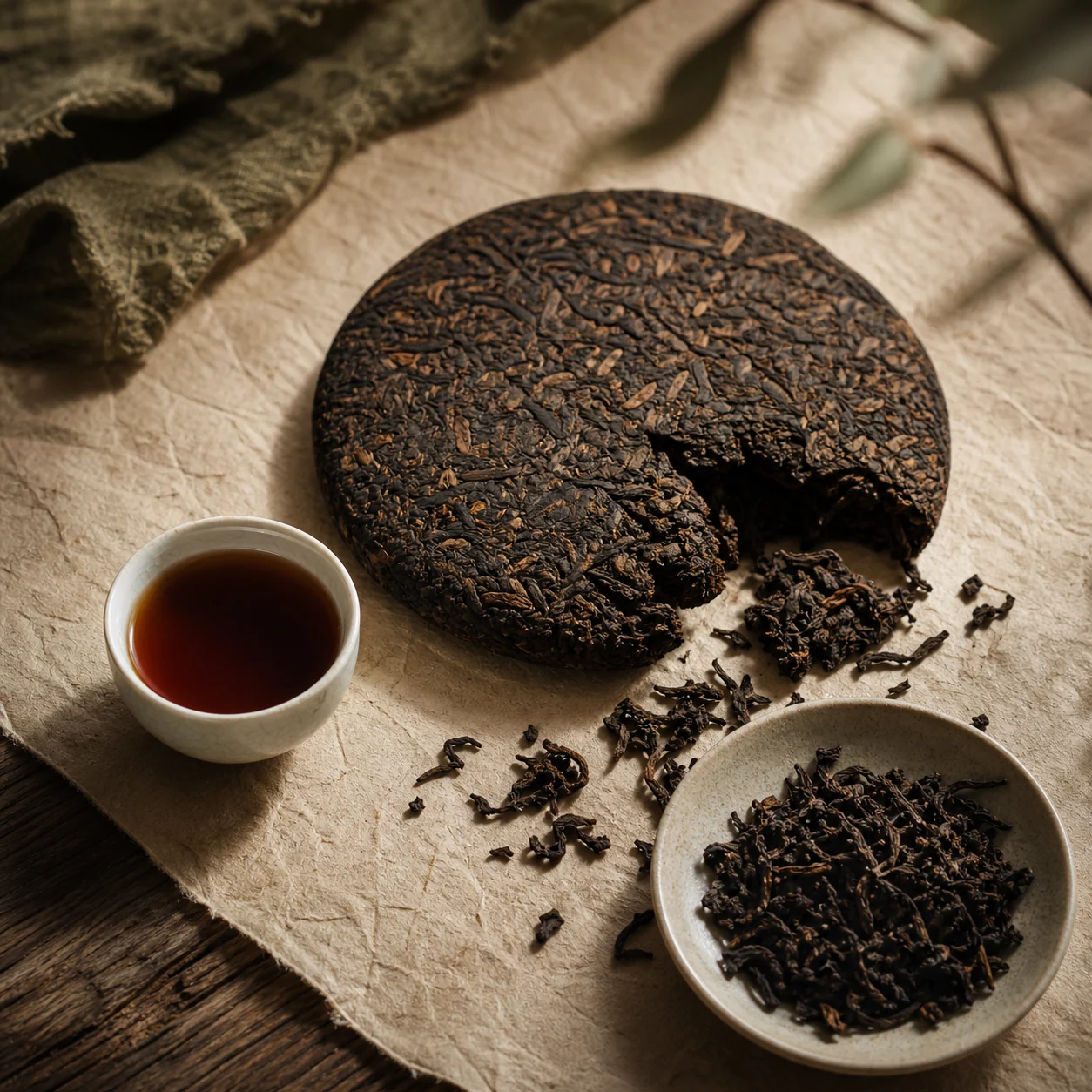
Many dark teas are compressed for transport and aging. Ventilation, humidity, packaging and odor control influence later development.
Practical guidance
Use near-boiling water. A brief rinse can warm and open compressed leaf; then brew gongfu, in a larger pot or by gentle boiling depending on the style.
Identification and caution
Post-fermentation does not justify medical or weight-loss claims. Evaluate the tea as food and drink, with attention to cleanliness and traceability.