
Province and core region
Yunnan → Xishuangbanna / Lincang / Pu'er CityEstablishes environment and administration, but cannot identify a specific tea.
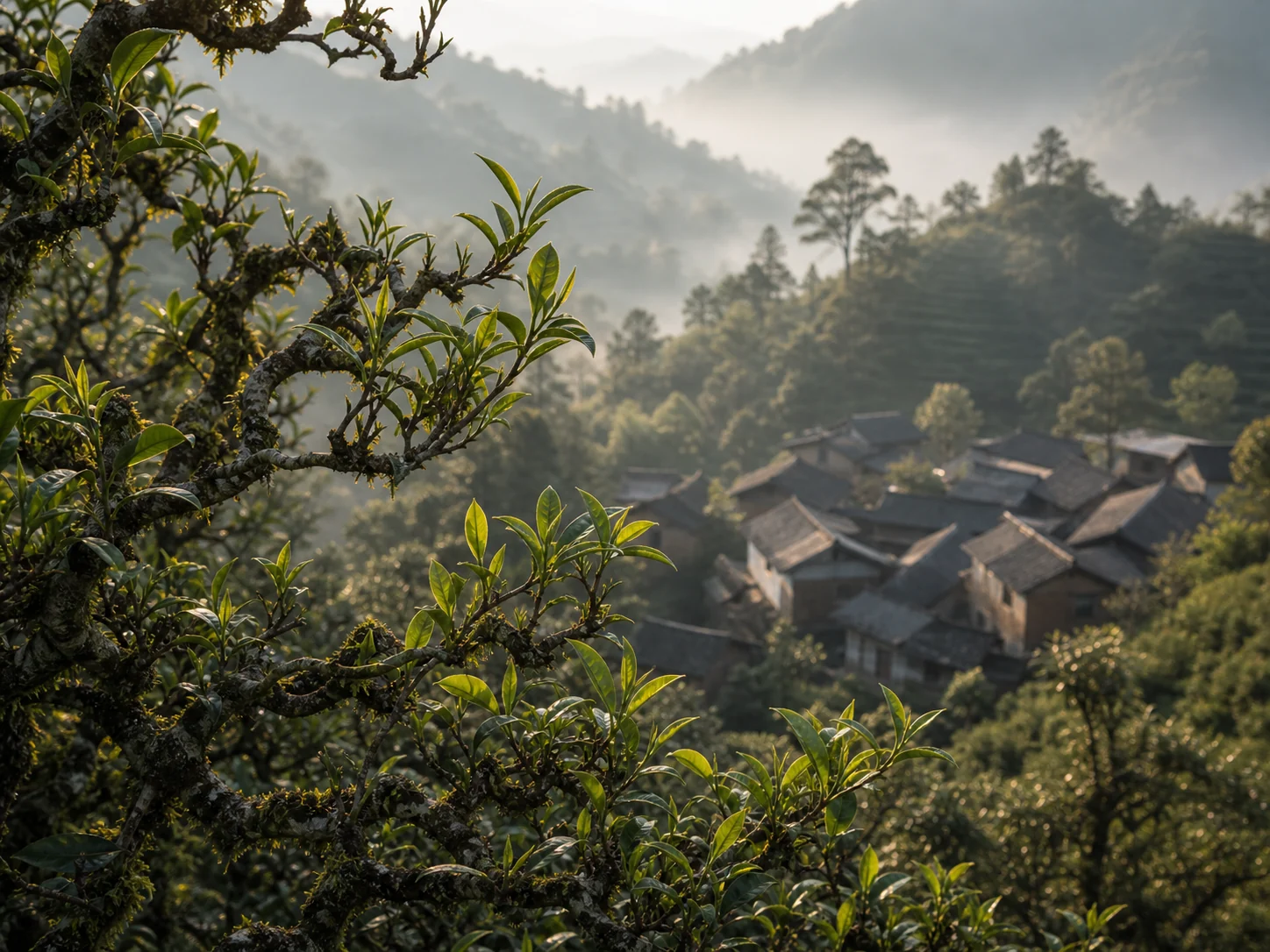
Read the geography before the mountain story. Yunnan tea is not a list of expensive names; this atlas separates region, county, mountain, village, micro-origin and batch.
Explore the originsThe more prestigious an origin becomes, the more important its missing middle levels are. A complete source statement connects all four.
Establishes environment and administration, but cannot identify a specific tea.
Narrows the claim to a real production and collection network.
Tests whether the name is a village, settlement, garden zone or market micro-origin.
Modern batch records support a product claim; a mountain story does not.
Every name returns to its parent region, county and village system. Flavor slogans never replace the map.
Build the prefecture and county framework before entering mountain and village names.
西雙版納茶區 · Xīshuāngbǎnnà cháqū
Xishuangbanna is one of Yunnan's three principal tea regions and contains several distinct origin systems, including Menghai's mountain areas and the historic tea mountains around Yiwu and Xiangming. The prefecture name is a useful first coordinate, not a complete origin.
Read full entry臨滄茶區 · Líncāng cháqū
Lincang is a major Yunnan tea region rather than one flavor style. Shuangjiang and Mengku, Fengqing, Linxiang, Yongde, Yun County and other areas support different large-leaf materials, Pu'er traditions and black-tea production.
Read full entry普洱市茶區 · Pǔ'ěr Shì cháqū
Pu'er City is a modern administrative tea region inside Yunnan; Pu'er tea is a regulated tea category whose eligible production geography is broader. Keeping those two meanings separate prevents a basic origin error.
Read full entry保山與德宏茶區 · Bǎoshān yǔ Déhóng cháqū
Baoshan and Dehong are meaningful parts of Yunnan tea geography even though international Pu'er discussion often concentrates on Xishuangbanna, Lincang and Pu'er City. They should be documented on their own terms, not treated as anonymous Yunnan material.
Read full entrySeparate raw-material mountains, village origin and the Menghai processing system.
勐海茶區 · Měnghǎi cháqū
Menghai is both a county of diverse tea mountains and a major Pu'er processing center. Bulang, Nannuo, Bada, Pasha and Mengsong describe different source areas, while a 'Menghai taste' may also refer to factory fermentation or blending traditions.
Read full entry布朗山茶區 · Bùlǎng Shān cháqū
Bulang Mountain is a broad inhabited tea landscape in Menghai County, not one estate. It includes villages such as Laobanzhang and Laomane and is closely connected with Blang and Hani communities.
Read full entry南糯山茶區 · Nánnuò Shān cháqū
Nannuo Mountain is a multi-village tea area in Menghai County associated with Hani communities and a long history of tea cultivation. The mountain name should not be treated as one uniform garden.
Read full entry巴達山茶區 · Bādá Shān cháqū
Bada is a western Menghai mountain area known in tea literature for both cultivated gardens and wild tea-tree resources. Wild plants and tea made for sale must not be treated as the same category.
Read full entry帕沙茶區 · Pàshā cháqū
Pasha is a named tea area within Gelanghe Hani Township in Menghai. It is geographically more specific than 'Menghai' but can still represent several settlements and collection relationships.
Read full entry老班章 · Lǎobānzhāng
Laobanzhang is a village-level origin inside the wider Bulang Mountain system. Its exceptional market premium makes traceability and realistic volume more important than sensory descriptions or prestige language.
Read full entry老曼峨 · Lǎomàn'é
Laomane is a Blang-community village origin within Bulang Mountain. It is often marketed through a single idea of strong bitterness, but village tea is more diverse than that shorthand.
Read full entryConnect historical tea mountains with modern administration, villages and market micro-origins.
古六大茶山 · Gǔ Liù Dà Cháshān
The Ancient Six Tea Mountains are a historical-commercial framework, commonly listed today as Yiwu, Yibang, Manzhuan, Mangzhi, Gedeng and Youle. They are not six identical estates and their boundaries and spellings vary across historical records.
Read full entry易武村寨與微產區 · Yìwǔ cūnzhài yǔ wēi chǎnqū
Yiwu is a large origin system containing towns, villages, natural settlements, forest areas and modern micro-origin names. Mahei, Luoshuidong, Gaoshan, Dingjiazhai, Guafengzhai and Wangong do not all sit at the same administrative or geographic level.
Read full entry倚邦茶山 · Yǐbāng Cháshān
Yibang is one of the commonly recognized Ancient Six Tea Mountains in present-day Mengla County. Historical fame and local tea-plant diversity are relevant context, but neither proves a modern retail batch.
Read full entry蠻磚茶山 · Mánzhuān Cháshān
Manzhuan is one of the Ancient Six Tea Mountains and is generally mapped to present-day Xiangming in Mengla County. It is a historical region with modern villages and gardens, not a single preserved estate.
Read full entry莽枝茶山 · Mǎngzhī Cháshān
Mangzhi is a historical tea-mountain name within the Ancient Six framework, generally associated with present-day Xiangming. Modern revival of the name should be tied to current geography and producers.
Read full entry革登茶山 · Gédēng Cháshān
Gedeng is one of the historical Ancient Six Tea Mountains, generally located in the Xiangming area of Mengla. Its modern identity depends on careful linkage between historical naming and current gardens.
Read full entry攸樂(基諾山) · Yōulè (Jīnuò Shān)
Youle is the historical tea-mountain name commonly linked with present-day Jinuo Mountain in Jinghong. It is the Ancient Six member outside present-day Mengla County and is inseparable from Jino-community history.
Read full entryOne broad region contains raw Pu'er material, premium village systems and Dianhong craft.
勐庫茶區 · Měngkù cháqū
Mengku is a broad tea area in Shuangjiang, not a synonym for Bingdao. Local discourse commonly divides its mountains into eastern and western sides, each containing many villages and gardens.
Read full entry冰島五寨 · Bīngdǎo Wǔ Zhài
Bingdao Five Villages is a commonly used framework for Bingdao Laozhai, Dijie, Nanpo, Bawai and Nuowu within the wider Mengku area. 'Bingdao' without the village level is therefore incomplete and may be used at very different geographic scales.
Read full entry昔歸 · Xīguī
Xigui is a named village origin in Bangdong Township, Linxiang District. It is often discussed because its tea gardens sit in a warm Lancang River valley setting that complicates the simple belief that all valued tea must come from the highest elevations.
Read full entry鳳慶茶區 · Fèngqìng cháqū
Fengqing is one of the central origins of Dianhong, Yunnan black tea. Its identity comes from large-leaf material, black-tea craft and a county-wide production history, not from one mountain-village premium system.
Read full entrySeparate Pu'er City, the regulated tea category and distinct county-level tea landscapes.
困鹿山 · Kùnlù Shān
Kunlu Mountain is a named tea area in Ning'er County within the wider Pu'er City region. Its royal or tribute-tea stories are part of market history, but modern batches still require present-day provenance.
Read full entry景谷茶區 · Jǐnggǔ cháqū
Jinggu is a county-level origin in Pu'er City with diverse tea materials and processing. Tea grown there may enter Pu'er production or other styles, so the county name does not determine the finished category.
Read full entry景邁山茶 · jǐng mài shān chá
Jingmai Mountain tea refers to material associated with villages and tea-forest landscapes of Jingmai. It is an origin claim that requires village, garden and batch traceability.
Read full entryChinese tea sites can reveal place names, vocabulary and search demand. Public knowledge still requires source ranking, cross-checking and original synthesis.
Industry sites, local articles and search results build the name list, synonyms and reader questions. Their body copy is not reproduced.
Government plans, protection registers, heritage records, World Heritage documents and mappable places receive priority.
Price, tree age, scarcity, health effects and fixed flavor claims remain unverified unless independent evidence supports them.
The encyclopedia locates a place within the knowledge system. A product page must still provide its own batch origin, year, making, testing and chain-of-custody records.